
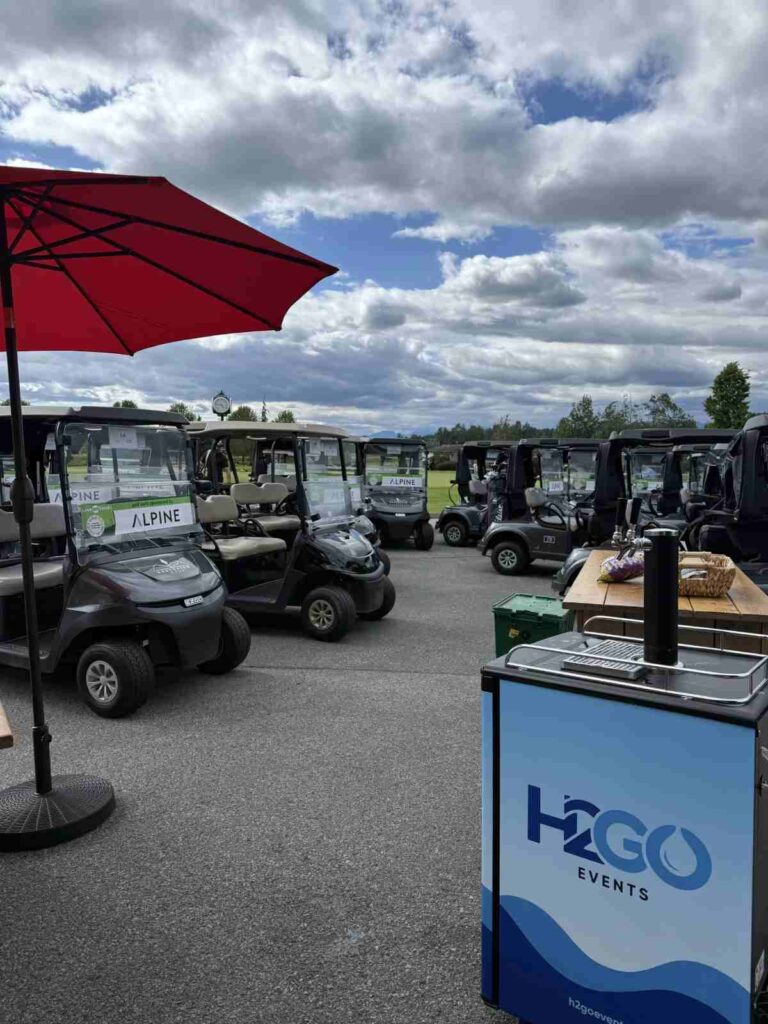
- Bottled water costs more than the purchase price once labor and cleanup are included.
- Refill stations reduce hauling, restocking, and plastic waste at large events.
- The best comparison is total event operations, not just the cost of drinking water.
- For high-volume events, refill stations simplify hydration for both crews and attendees.
Most event organizers budget for bottled water by counting cases or pallets. The purchase price is only part of the calculation.
Someone still needs to unload the water, move it around the event site, restock supplies, and handle empty bottles after the event. Those tasks require labor, storage space, and waste handling.
That is why water refill station cost should be compared with the full operating cost of bottled water. For large festivals, races, and other high-volume events, the comparison should account for more than the purchase price of the water itself.

The Real Cost of Bottled Water at Events
Buying bottled water starts with the purchase price. The operating work continues after the delivery reaches the event site.
According to the Beverage Marketing Corporation (BMC), the average wholesale price for domestic non-sparkling bottled water was $1.44 per gallon in 2023. This is a market benchmark. Your actual cost depends on the supplier, package size, purchase volume, and delivery requirements.
For a specific bulk example, Dillon Supply currently lists an 84-case pallet of 16.9-ounce bottled water at $557.59. Each case contains 24 bottles, and additional freight is calculated at shipment.
Distribution Adds Labor
The water still needs to move from delivery to the areas where attendees receive it.
Staff or volunteers may move cases to multiple distribution points and restock them during the event. The work depends on the event layout, distribution points, and restocking needs.
According to the U.S. Bureau of Labor Statistics, the May 2025 national mean hourly wage for laborers and freight, stock, and material movers, hand was $20.32. This is a national wage benchmark, not an event-specific staffing rate.
Cleanup Adds Labor
Empty bottles become part of the event’s waste stream after use.
Staff or waste crews need to collect them and move them to the appropriate recycling or waste areas. According to the U.S. Bureau of Labor Statistics, the May 2025 national mean hourly wage for refuse and recyclable material collectors was $25.39.
These figures provide context, not an event-specific cost. For your budget, use your actual staffing, delivery, and waste-hauling rates.
What a Refill Station Actually Costs
When you compare bottled water vs. water station options, look beyond the purchase price. A refill station includes delivery, setup, event-day support, and load-out.
The cost depends on the station setup and requirements of your event. Request a quote based on your event date, location, attendance, duration, and water access.
A refill station rental through H2GO includes:
- Delivery to the event site
- Station setup and positioning
- On-site water filtration
- Event-day monitoring and support
- Refills when needed
- Station shutdown, drainage, and removal
Station configuration depends on your event requirements. The Forge has four taps for high-traffic events. The Cube has two taps. Titan Station has six refill taps and operates without electricity.
Instead of purchasing and distributing cases throughout the event, you provide attendees with access to drinking water through centralized refill stations.
For a fair comparison, look beyond the number of bottles. Include bottled-water purchases, delivery, distribution labor, restocking, waste handling, and the refill station quote.
If you’re planning a large festival, race, sporting event, or other large public event in Florida, explore H2GO’s Florida event services to see how we support large-scale events across the state.
The Waste Problem Bottled Water Creates
Bottled water adds individual containers to your event’s waste stream.
After attendees finish a bottle, the container needs to be collected and moved to the appropriate recycling or waste area. That work becomes part of the event’s cleanup and load-out process.
Each bottle also takes up physical space in collection and storage areas before removal. Your waste contractor may need to account for the added material when planning collection and hauling.
For a large event, include these tasks when calculating the operating cost of bottled water:
- Bottle collection
- Recycling and waste sorting
- Waste storage
- Waste removal and hauling
- Cleanup and load-out
The actual cost depends on your waste contractor, collection schedule, staffing, and hauling requirements. Use your event’s own waste and hauling rates rather than applying an unsupported estimate.
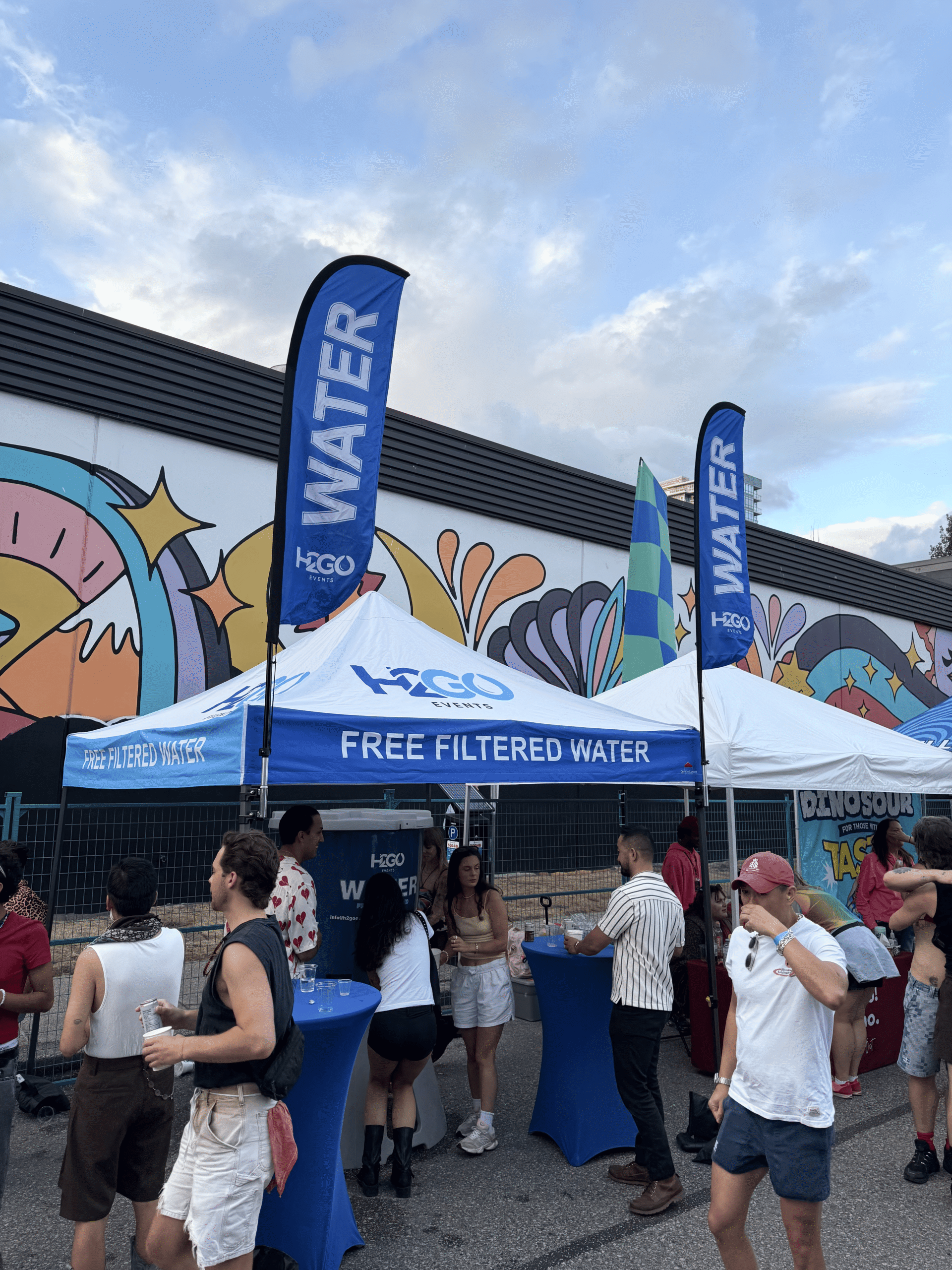
A water refill station changes what attendees receive at the event. Instead of distributing individual bottles, H2GO stations provide filtered drinking water through multiple taps for attendees using reusable bottles or cups.
The result is a different waste operation. You are no longer distributing individual bottled-water containers through the event site. For a true cost comparison, account for bottled-water waste and hauling alongside the setup and service included in a refill station quote.
Side-by-Side Comparison
For a large-scale event, compare the full operation rather than the water purchase alone.
| Factor | Bottled Water | Refill Station |
|---|---|---|
| Cost | Includes water purchases, delivery, distribution, and waste handling | Requires a quote based on the event setup and requirements |
| Staff workload | Staff or volunteers move cases, distribute bottles, and restock supplies | H2GO handles setup, monitors station performance, and manages refills when needed |
| Storage | Cases and pallets require space before and during distribution | Station placement and water access are planned as part of the event setup |
| Cleanup | Empty bottles enter the event’s waste stream | Attendees refill reusable bottles or cups instead of receiving individual bottles |
| Waste management | Bottles require collection, sorting, and recycling or waste handling | Individual bottled-water containers are not distributed through the stations |
| Attendee experience | Attendees receive individual bottles at distribution points | Attendees refill bottles or cups at stations with multiple taps |
| Load-out | Bottled-water waste becomes part of the event cleanup process | H2GO handles station shutdown, drainage, and removal |
The difference is the work required to provide drinking water. Bottled water involves purchasing, moving, distributing, restocking, and handling empty containers. A refill station shifts the operation to station setup, water supply, event-day monitoring, refills when needed, and load-out.
FAQ
How much water does a typical event attendee drink?
There is no fixed amount for every event. Water needs depend on attendance, event duration, weather, activity level, and site conditions. H2GO uses those details when planning your station setup. The team considers attendance, duration, location, water access, and site requirements.
Is a refill station actually cheaper than bottled water for a one-day event?
It depends on the event. Compare the full operation, not just the cost of the water. Bottled water requires purchasing, delivery, storage, distribution, restocking, and waste handling. A refill station requires an event-specific setup based on your attendance, duration, location, water access, and station requirements.
What happens to the plastic waste from bottled water at large events?
Empty bottles become part of the event’s waste stream. Your crew or waste contractor must collect, sort, store, and remove them. H2GO stations provide filtered drinking water through multiple taps. Attendees can refill reusable bottles or cups instead of receiving individual bottled-water containers.
Do refill stations work for events without existing water hookups?
Yes, depending on the station and site requirements. H2GO Events can provide bulk water delivery.
Get a Quote for Your Event
Planning hydration for a large festival, race, sporting event, or community event?
H2GO Events provides water refill stations with delivery, setup, event-day monitoring, refills when needed, and load-out. The crew plans the setup around your attendance, event duration, location, water access, and site requirements.
Explore Water Station Rentals or Contact H2GO Events to discuss your event.